

Serves 4
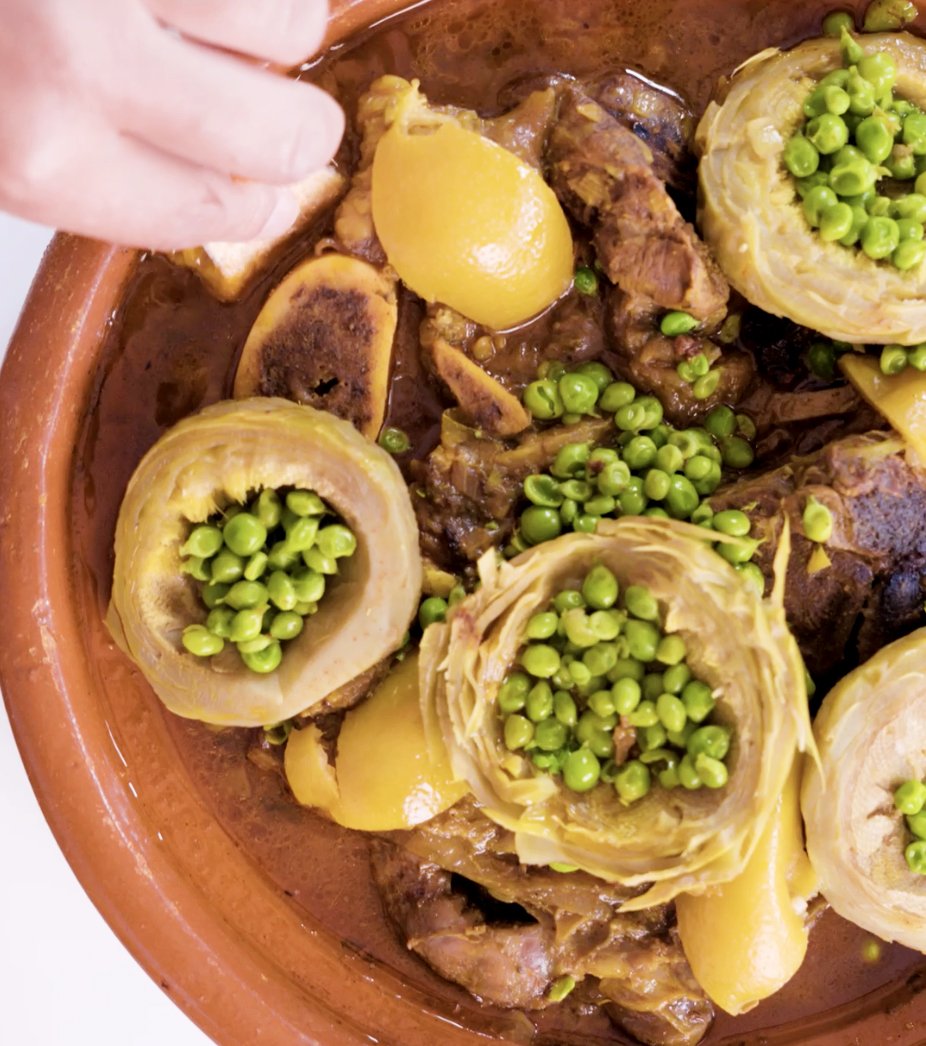
A slow-braised Moroccan tagine built around tender beef shank, bright artichoke hearts, sweet spring peas, and the briny lift of preserved lemon — perfumed with saffron, Ras el Hanout, and Mehdi’s spice pantry.
Ingredients
• 2 lbs beef shank, bone-in, cut into 2-inch pieces
• 1 tsp turmeric
• ½ tsp Villa Jerada Ras el Hanout
• 1 tsp ginger powder
• 1 tsp white peppercorns, finely ground (or black pepper)
• 1 pinch saffron threads
• ½ tsp fine sea salt
• ½ cup water (for marinade)
• 2 tbsp olive oil
• 2 medium yellow onions, thinly sliced
• 3 garlic cloves, left whole and unpeeled
• 2 cups water (for braising)
• ¼ cup fresh parsley, roughly chopped
• ¼ cup fresh cilantro, roughly chopped
• 4 artichoke hearts, fresh or thawed, quartered
• 2 cups fresh or frozen peas
• 1½ preserved lemon peels, pulp removed, thinly sliced
• 1 tbsp lemon juice (for acidulated water)
Method
1. Bloom the saffron.
Add the saffron threads to the ½ cup of water and let steep for 10 minutes until the water turns deep gold. This activates the saffron’s color and fragrance before it hits the meat.
2. Make the spice marinade.
In a large bowl, combine the turmeric, Ras el Hanout, ginger, pepper, and salt. Pour in the saffron water and whisk to form a loose paste. Add the beef shank pieces and toss well to coat. Marinate for at least 30 minutes at room temperature, or up to overnight in the refrigerator.
3. Prep the artichokes.
Fill a bowl with cold water and the lemon juice. Trim the artichokes down to the hearts, removing the outer leaves, choke, and stem. Quarter each heart and drop immediately into the acidulated water to prevent browning. Set aside.
4. Sweat the onions.
Heat the olive oil in a tagine or heavy-bottomed Dutch oven over medium heat. Add the onions and garlic cloves. Cook, stirring occasionally, until soft and translucent — about 5 to 7 minutes. Do not brown.
5. Sear the beef.
Push the onions to the side and add the marinated beef shank in a single layer. Sear on all sides until lightly browned, about 5 to 7 minutes total. This builds depth in the braise.
6. Start the braise.
Add the 2 cups of water and scrape up any bits from the bottom of the pot. Bring to a gentle boil, then reduce to a low simmer. Cover tightly and cook for 30 minutes.
7. Add the herbs and artichokes.
Scatter in the parsley and cilantro. Drain the artichoke hearts and add them to the pot along with the preserved lemon. Stir gently to combine. Cover and continue cooking for 20 minutes.
8. Add the peas and finish.
Add the peas to the pot. If using fresh peas, cook uncovered for 10 to 15 minutes until tender. If using frozen, 5 minutes is enough. The broth should be fragrant and slightly reduced. Taste and adjust salt.
9. Rest and serve.
Remove from heat and let the tagine rest, uncovered, for 5 minutes before serving. Serve directly from the pot with crusty bread, khobz, or over a bed of couscous. Garnish with a few extra sprigs of fresh cilantro.
Notes
Artichoke shortcut: Frozen artichoke hearts work beautifully and skip the prep entirely. Thaw completely before adding.
Make it ahead: Like most braises, this tagine improves overnight. Reheat gently and add the peas fresh when serving.
Beef substitution: Bone-in lamb shoulder or neck works equally well and is traditional in many Moroccan households.
Vegetarian option: To make this tagine meat-free, simply omit the beef shank. Start by sweating the onions and garlic as directed, then add the spice marinade directly to the pot and cook for 2 to 3 minutes to bloom the spices in the oil. Add the water, bring to a simmer, and proceed with the recipe from step 7. Without the meat, the artichokes and peas carry the dish beautifully — the preserved lemon and saffron broth more than hold their own. A handful of canned chickpeas added with the peas makes it more substantial.


